logo
Bon prix  en ligne

Détails des produits

Created with Pixso. Maison Created with Pixso. Produits Created with Pixso.
équipement de laboratoire scientifique
Created with Pixso.

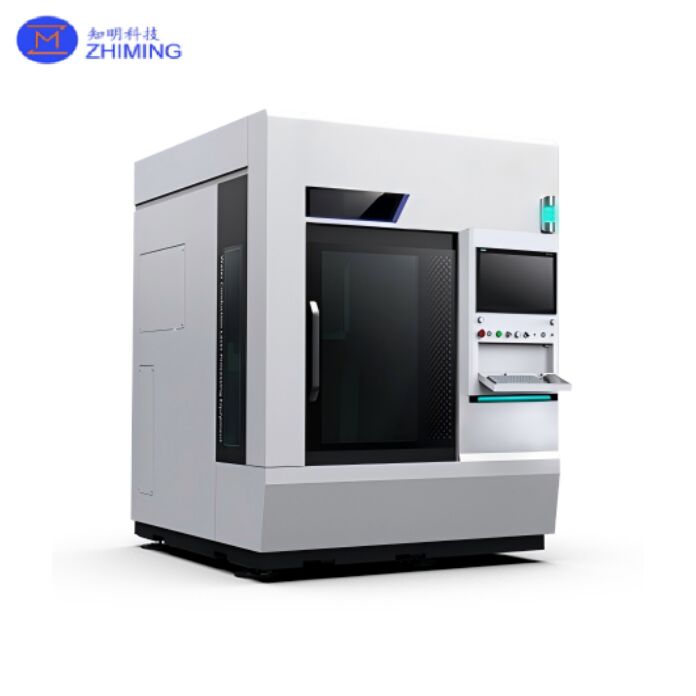
Micro Waterjet-Guided Laser Processing Machine

Micro Waterjet-Guided Laser Processing Machine

Nom De Marque: ZMSH
MOQ: 1
Prix: by case
Détails De L'emballage: Cartons personnalisés
Conditions De Paiement: T/T
Les informations détaillées
Lieu d'origine:
Chine
Type de laser:
Nd:YAG, pulsé
Longueur d'onde (nm):
532
Enveloppe de travail (y compris les luminaires) (mm):
400 × 320 × 100
Précision de positionnement X/Y/Z (μm):
±3 μm (JIS) / 5 μm (ISO)
Répétabilité X/Y/Z (μm):
±1,5 μm (JIS) / 3 μm (ISO)
Dimensions de la machine (L × P × H) (mm):
1200 × 1750 × 2100
Capacité d'approvisionnement:
Par cas
Description de produit

Introduction

As manufacturing continues to demand higher precision and productivity, water-jet guided laser (WJGL) technology is gaining momentum in both engineering adoption and market potential. In high-end sectors such as aerospace, electronics, medical devices, and automotive manufacturing, stringent requirements are imposed on dimensional accuracy, edge integrity, heat-affected zone (HAZ) control, and the preservation of material properties. Conventional processes—mechanical machining, thermal cutting, and standard laser processing—often struggle with excessive thermal impact, microcracking, and limited compatibility with highly reflective or heat-sensitive materials.

Micro Waterjet-Guided Laser Processing Machine 0

To address these constraints, researchers introduced a high-speed micro water jet into the laser process, creating WJGL. In this configuration, the water jet serves simultaneously as a beam-guiding medium and an effective coolant/debris-removal medium, improving cut quality and broadening material applicability. Conceptually, WJGL is an innovative hybrid of traditional laser processing and water-jet cutting, offering high energy density, high precision, and markedly reduced thermal damage—attributes that support a wide range of precision manufacturing scenarios.


Working Principle of Water-Jet Guided Laser

As illustrated in Fig. 1, the central concept of WJGL is to transmit laser energy through a continuous water jet, effectively functioning as a “liquid optical fiber.” In conventional optical fibers, light is guided by total internal reflection (TIR) due to the refractive-index difference between the core and cladding. WJGL leverages the same mechanism at the water–air interface: water has a refractive index of approximately 1.33, while air is about 1.00. When the laser is coupled into the jet under appropriate conditions, TIR confines the beam within the water column, enabling stable, low-divergence propagation toward the machining zone.


Micro Waterjet-Guided Laser Processing Machine 1


Nozzle Design and Micro-Jet Formation


Efficient laser coupling into the jet requires a nozzle capable of producing a stable, continuous, near-cylindrical micro-jet, while allowing the laser to enter at a suitable angle to maintain TIR at the water–air boundary. Because jet stability strongly governs beam transmission stability and focusing consistency, WJGL systems typically rely on precise fluid control and carefully engineered nozzle geometries.

Figure 2 shows representative jet states generated by different nozzle types (e.g., capillary and various conical designs). Nozzle geometry influences jet contraction, stable length, turbulence development, and coupling efficiency—thereby impacting machining quality and repeatability.

Water also exhibits wavelength-dependent absorption and scattering. In the visible and near-infrared ranges, absorption is relatively low, supporting efficient transmission. In contrast, absorption increases in the far-infrared and ultraviolet ranges, so most WJGL implementations operate in the visible to near-infrared bands.

Fig. 2 Nozzle structures for micro-jet formation: (a) contraction schematic; (b) capillary nozzle; (c) conical nozzle; (d) upper conical nozzle; (e) lower conical nozzle

Micro Waterjet-Guided Laser Processing Machine 2


Key Advantages of WJGL


Traditional machining routes include mechanical cutting, thermal cutting (e.g., plasma/flame), and conventional laser cutting. Mechanical machining is contact-based; tool wear and cutting forces can induce micro-damage and deformation, limiting achievable precision and surface integrity. Thermal cutting is efficient for thick sections but typically produces large HAZ, residual stresses, and microcracks that reduce mechanical performance. Conventional laser processing, while versatile, may still suffer from relatively large HAZ and unstable performance on highly reflective or heat-sensitive materials.

Micro Waterjet-Guided Laser Processing Machine 3

As summarized in Fig. 3, WJGL uses water as the transmission medium and a concurrent coolant, significantly reducing HAZ and suppressing distortion and microcracking, thereby improving precision and edge/surface quality (see Fig. 4). Its advantages can be summarized as follows:

  1. Low thermal damage and improved quality: The high specific heat capacity and continuous flow of water rapidly remove heat, limiting thermal accumulation and helping preserve microstructure and properties.

  2. Enhanced focusing stability and energy utilization: Confinement within the jet reduces scattering and energy loss compared with free-space propagation, enabling higher energy density and more consistent processing—well suited to fine cutting, micro-drilling, and complex geometries.

  3. Cleaner and safer operation: The water medium captures and removes fumes, particulates, and debris, reducing airborne contamination and improving occupational safety.

Micro Waterjet-Guided Laser Processing Machine 4Specification


System Item Parameters & Description
Optical Path System Laser Type Nd:YAG, pulsed
Optical Path System Wavelength (nm) 532
Optical Path System Average Power (W) 60 / 100
Optical Path System Fiber Core Diameter (μm) Φ100 / Φ150
Water Supply System Water Pressure Stability (bar) ±5
Water Supply System Water Pressure (bar, max) 500
Water Supply System Nozzle Diameter (μm) 40–100
Motion System Working Envelope (incl. fixtures) (mm) 400 × 320 × 100
Motion System Maximum Speed (mm/s) 500
Motion System X/Y/Z Positioning Accuracy (μm) ±3 μm (JIS) / 5 μm (ISO)
Motion System X/Y/Z Repeatability (μm) ±1.5 μm (JIS) / 3 μm (ISO)
Motion System Worktable Size (mm) 320 × 320
Motion System Worktable Load Capacity (kg) 20
Dimensions & Weight Machine Dimensions (W × D × H) (mm) 1200 × 1750 × 2100
Dimensions & Weight Optical & Water Integration Cabinet Dimensions (W × D × H) (mm) 700 × 1500 × 1700
Dimensions & Weight Machine Weight (kg) 1200
Dimensions & Weight Optical & Water Integration Cabinet Weight (kg) 500–600


Application Share and Sector Distribution of Water-Jet Guided Laser (WJGL) Cutting Materials


Aerospace and Energy (≈30–35%)

This sector represents the largest share of WJGL applications. Typical materials include carbon fiber reinforced polymers (CFRP), aluminum matrix composites (Al MMC), and ceramic matrix composites (CMC). WJGL is particularly suitable for these materials due to its ability to minimize thermal damage and preserve mechanical properties when cutting thermally sensitive and anisotropic composites used in high-performance aerospace and energy structures.

Precision Instruments and Metallic Materials (≈25–30%)

A significant portion of WJGL usage is devoted to precision metal processing. Representative applications include engine blades manufactured from Ni-based superalloys (e.g., Inconel 718, Haynes 188), titanium alloys (Ti-6Al-4V), and high-precision components such as wristwatch parts made from Cu, Al, and Ti. The technology enables high dimensional accuracy, narrow kerf widths, and superior surface quality.

Semiconductors and Microelectronics (≈20–25%)

In the semiconductor and microelectronics sector, WJGL is widely applied to the cutting of crystalline and brittle materials, including silicon wafers, diamonds, and photovoltaic materials such as Si and GaAs. Its capability to suppress micro-cracks, chipping, and subsurface damage makes it well suited for high-precision wafer dicing and micro-scale fabrication.

Medical Components (≈10–15%)

Although smaller in overall share, medical applications are of high technological value. WJGL is mainly used for fabricating cardiovascular flat stents from biocompatible alloys such as CoCr, NiTi, Cr-Pt, and magnesium alloys. The process meets stringent requirements for ultra-fine features, tight tolerances, and minimal heat-affected zones critical to medical device performance.

Overall, the sectoral distribution demonstrates that WJGL cutting is predominantly employed in advanced manufacturing domains where high precision, low thermal impact, and excellent material integrity are essential.

Micro Waterjet-Guided Laser Processing Machine 5Water-Jet Guided Laser (WJGL) FAQ


1) What is Water-Jet Guided Laser (WJGL) machining?

WJGL is a laser processing method in which the laser beam is coupled into a micro water jet. The water jet acts as both a beam-guiding medium and a cooling/debris-removal medium, enabling high precision with reduced thermal damage.


2) How does WJGL work?

WJGL relies on total internal reflection at the water–air interface. Because water and air have different refractive indices, the laser can be confined and guided within the water column—similar to a “liquid optical fiber”—and delivered stably to the machining zone.


3) Why does WJGL reduce the heat-affected zone (HAZ)?

The continuously flowing water removes heat efficiently due to its high heat capacity. This suppresses heat accumulation, reducing HAZ, distortion, and microcracking.